

While the presence of large, buzzing insects can make your outdoor space uninviting, ground-burrowing wasps aren’t the aggressive yellowjackets most homeowners fear. Commonly called digger wasps or ground wasps, these solitary insects excavate nests in dry dirt to rear their young. Though they contribute to natural pest control on Long Island, their persistent burrowing can quickly disfigure healthy turfgrass and ruin outdoor living areas.
Key Takeaways:
- Digger wasps are solitary and lack a central colony to protect, making them non-aggressive toward humans unless stepped on or crushed.
- “Digger wasp” is a general name for solitary burrowers, while the Eastern Cicada Killer is a specific, giant species within that family.
- Male digger wasps cannot sting because they lack an ovipositor (stinger); their territorial hovering is strictly a bluff.
- Their primary harm is physical—multi-generational nest sites displace soil, weaken turf roots, and create unsightly mounds.
- Keeping soil moist and overseeding bare spots prevents females from establishing new burrows.
Why Are They Called “Digger Wasps”?
Digger wasps earn their name from their habit of excavating underground tunnels. They prefer dry, loose soil found in lawn sparse spots, flowerbeds, garden borders, mulch, and pine straw. They may also burrow under sidewalks, patios, or along driveway edges. Once a female digs a suitable gallery, she provisions it with paralyzed prey, lays her eggs, and seals the chamber.
What Do Digger Wasps Look Like?
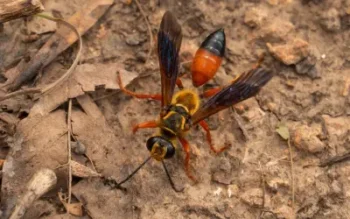
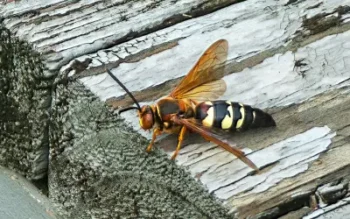
Eastern cicada killers (the most common large digger wasp on Long Island) grow up to two inches long. They feature a rusty-red head and thorax, a black abdomen marked with bright yellow stripes, and yellow-tinted wings. Their large size often causes homeowners to mistake them for hornets, but their behavior and nesting habits are entirely different.
Digger Wasps vs. Cicada Killers: What’s the Difference?
While the terms are often used interchangeably by homeowners, “digger wasp” is a broad umbrella category for many solitary burrowing species, whereas the Eastern Cicada Killer is one specific, giant species within that group.
| Feature | Great Golden Digger Wasp (Sphex ichneumoneus) | Eastern Cicada Killer (Sphecius speciosus) |
| Average Size | 0.5 to 1 inch long | Up to 2 inches long (much larger) |
| Coloring | Black body, reddish-orange abdomen tip, golden head hairs | Reddish head/thorax, black abdomen with yellow stripes |
| Primary Target Prey | Katydids, crickets, and grasshoppers | Annual cicadas |
| Nesting Season | Early to mid-summer | Mid to late summer (July–August) |
| Sting Threat Level | Very low; timid, non-aggressive solitary species | Low; females rarely sting unless crushed; males lack stingers |
Need an Estimate for Bee, Wasp & Hornet Control?
Do Ground Wasps Sting Humans?
Digger wasps rarely sting humans and will only do so if directly stepped on or crushed. Because they are solitary insects with no central hive or queen to defend, they lack the defensive aggression seen in social hornets or yellowjackets. A digger wasp sting is comparable to a honeybee sting and typically causes minor, localized pain.
Only female digger wasps possess stingers, which they primarily use to paralyze prey for their larvae. Male digger wasps lack stingers entirely and are physically incapable of stinging. While males may buzz aggressively near nest sites to guard their territory, this behavior is a bluff and poses no physical danger. If you experience severe swelling, hives, or difficulty breathing after any insect sting, seek medical care immediately.
Are Digger Wasps Dangerous?
Digger wasps pose very little physical danger to humans or pets, though their large size and nest mounds cause significant concern for homeowners. They do not swarm, and their venom is reserved for paralyzing cicadas and other garden insects rather than defense. The primary issue they cause is aesthetic and structural damage to lawns and landscaping through extensive burrowing.
How to Tell the Difference: Harmless vs. Dangerous Ground Wasps
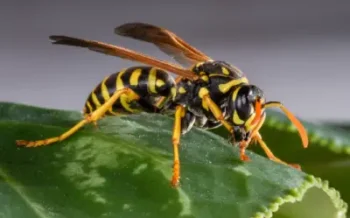
Not all wasps flying near the grass are harmless solitary diggers. In Long Island (Nassau and Suffolk Counties), the primary dangerous stinging pests are social wasps like Ground-Nesting Yellowjackets (Vespula maculifrons or Vespula germanica) and Bald-Faced Hornets (Dolichovespula maculata).
While a digger wasp acts alone and avoids conflict, social wasps aggressively defend their colonies in swarms. Knowing what to look for keeps your family safe and helps you decide when to call a professional pest control team.
| Identification Feature | Harmless Digger Wasp / Cicada Killer | Dangerous Ground-Nesting Yellowjacket |
| Species Class | Solitary insect (Sphecius speciosus or Sphex spp.) | Social colony insect (Vespula species) |
| Size | Large to massive (1.5 to 2+ inches) | Small to medium (0.5 to 0.75 inches) |
| Coloration | Rusty-red head, black body with yellow abdominal patches | Bright, alternating black-and-yellow bands across the body |
| Nest Appearance | Individual holes with horseshoe-shaped dirt mounds | Hidden single entry hole with no dirt mound (uses old rodent burrows) |
| Traffic & Behavior | 1 or 2 wasps flying low, kicking dirt, or hovering passively | Constant stream of dozens or hundreds of wasps entering/exiting |
| Aggression Level | Extremely Low. Non-defensive; males bluff by hovering, females ignore humans unless crushed. | Extremely High. Highly territorial; attacks in swarms if the nest is stepped near or mowed over. |
Are Digger Wasps Social or Solitary?
Digger wasps are strictly solitary insects. Unlike yellowjackets or honeybees that live in large, cooperative colonies, every female digger wasp works independently to dig her own nest and care for her own offspring.
On Long Island, adult digger wasps emerge in mid-to-late summer (typically July and August) when cicada populations peak. While you may see multiple wasps in one section of your yard, this is not a social colony; it is an aggregation of individual wasps selecting the same ideal soil conditions. Females may dive-bomb near humans to ward off perceived threats, but they will not attack in swarms.
Why Are Digger Wasps Difficult to Detect Early?
Digger wasps often go unnoticed until their excavation work causes visible lawn damage. In their first year on a property, a few individual burrows might look like minor ant hills. However, because new generations often return to the exact site where they hatched, populations can swell year after year if left unmanaged.
Over time, hundreds of individual females can establish independent burrows across a single yard. Their constant digging displaces soil, weakens turfgrass roots, leaves unsightly dirt mounds, and creates tripping hazards across the lawn.
How Can I Prevent Digger Wasps?
Maintaining a thick, healthy lawn is the most effective defense against digger wasps, as females cannot easily burrow through dense turf.
- Lawn Care: Fertilize, water regularly, and overseed bare patches to eliminate open soil.
- Mulch and Landscape Fabric: Cover exposed garden beds with weed barrier fabric topped with a thick layer of mulch or fine gravel.
- Moisture Management: Keep bare soil damp during peak emergence in mid-summer, as female wasps prefer dry, easily workable soil for digging.
Ground Wasp Removal in Long Island
When digger wasp populations take over your lawn, professional treatment provides fast, lasting relief. Suburban Exterminating offers targeted wasp control solutions across Nassau and Suffolk Counties to eliminate active ground nests and prevent returning generations from ruining your outdoor space. Contact our team today for a comprehensive inspection and free estimate.
Back to Wasp and Hornet Control


