
Skip to content

Carpenter Bee Control

Serving Suffolk County | Nassau County | Long Island

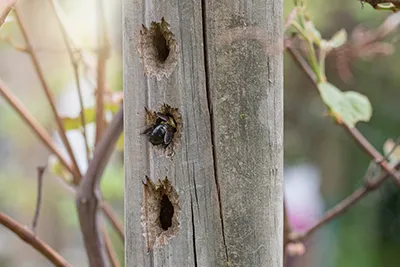
Carpenter bee entering nest in a wooden postCarpenter bees are typically calm and are unlikely to sting unless they are provoked or handled directly. They bore into wood to form nesting chambers where eggs are laid, and larvae are raised, but their activity can still lead to costly damage in homes throughout Suffolk County & Nassau County as they gradually tunnel through exposed wood over time. The young develop inside these tunnels until they mature into adults, and the same nesting sites are often reused and expanded each season without treatment. Since infestations often remain hidden until damage becomes visible, professional carpenter bee control from Suburban Exterminating is frequently recommended. Our services are designed to break this pattern and protect your home.

Carpenter Bees vs Honey Bees: Understanding the Differences

Carpenter bees and honey bees are often mistaken for one another at first, but they are not the same species. Their behavior, living environments, and physical characteristics clearly set them apart. Below are some of the main differences between carpenter bees and honey bees:
  • Social Behavior: Carpenter bees are typically solitary and are most commonly seen alone or in small numbers, while regular bees live in organized colonies that can include thousands of individuals working cooperatively.
  • Pollination Role: Carpenter bees are generally considered less efficient pollinators, while regular bees play a crucial role in pollinating flowers, crops, and many different plant species.
  • Nesting Habits: Carpenter bees build their nests by drilling into wood and creating tunnels within structural materials, while regular bees usually construct nests in trees, underground burrows, wall cavities, or other sheltered locations using wax combs.
  • Temperament: Carpenter bees tend to hover near people in a territorial way but rarely sting, whereas regular bees are typically non-aggressive and only sting when they feel threatened or provoked.

Ways to Identify Carpenter Bees Based on Appearance

Carpenter bees can be identified by several obvious physical traits that set them apart from other bee species. Their size, coloration, and smooth, glossy, nearly hairless bodies make them easy to spot near homes. Below are some of the main characteristics of carpenter bees:
  • Size and Shape: Carpenter bees are typically larger and more robust, with a thick, stocky body, while regular bees are generally smaller, slimmer, and lighter in overall structure.
  • Thorax Coloring: Both carpenter bees and regular bees have fuzzy thoraxes, but carpenter bees often display a brighter, more vivid yellow coloration in this area that can appear more noticeable.
  • Body Color: Carpenter bees may show a subtle metallic sheen in shades like blue, green, or purple, while regular bees usually have muted golden-and-black striping with a less reflective appearance.
  • Abdomen Texture: Carpenter bees have a smooth, shiny black abdomen with very little hair, whereas regular bees are covered in fine hairs that give them a softer, more textured look.

What Makes Suburban Exterminating a Great Choice for Carpenter Bee Control

There are multiple carpenter bee control options available in Suffolk County & Nassau County, and weโ€™re grateful youโ€™re considering Suburban Exterminating. Partnering with us means depending on trained professionals who focus on protecting your home from carpenter bees and their damage. Hereโ€™s how our proven extermination services work:

  • Experienced Technicians: Our exterminators are highly trained in carpenter bee behavior and region-specific treatment approaches. They are experienced in identifying active nesting areas, recognizing seasonal activity patterns, and distinguishing between nesting and territorial behavior to ensure accurate and effective treatment.
  • Customized Treatment Plans: Our carpenter bee control solutions are customized to fit the unique needs of your property. After a detailed inspection, we target active entry points, weakened wood structures, and potential nesting areas to eliminate current infestations and help prevent future activity.
  • Transparent Communication: We provide a detailed evaluation of carpenter bee activity along with a clear, step-by-step explanation of the treatment process. We also share practical recommendations to help reduce future wood damage and remain available to answer questions throughout every stage of service.
  • Fast Local Response: We emphasize quick response times from nearby carpenter bee control professionals who can act promptly to reduce damage before it escalates. Even short delays can result in more serious structural issues and increased repair costs, which we aim to help prevent.
  • Easy Online Management: Our simple, easy-to-use online system allows you to schedule services, manage payments, and track updates with ease. From start to finish, your carpenter bee control experience is designed to be seamless, efficient, and stress-free.

A Breakdown of Our Carpenter Bee Control Process

Frequently, homeowners turn to Suburban Exterminating when carpenter bees are actively damaging their home and creating concern. Hereโ€™s how we take care of the problem with prompt removal and lasting protection:

  1. Thorough Inspection: We conduct a detailed, careful inspection of your property to locate active carpenter bee entry points and areas that may be vulnerable to damage. Our technicians look for clear signs such as perfectly round holes in wood, fine sawdust-like debris, yellow staining caused by bee activity, and male bees hovering to defend territory. This comprehensive evaluation allows us to assess the severity of the infestation and determine the most effective treatment plan.
  2. Advanced Treatment Methods: Our targeted approach is designed to eliminate carpenter bees while preventing additional structural damage. We treat active tunnels directly, address developing insects within the wood, and apply protective treatments to at-risk areas, providing both immediate relief and long-term protection for your property.
  3. Ongoing Prevention Plan: Our prevention strategy focuses on keeping carpenter bees from returning in the future. We provide practical recommendations, suggest small property improvements, and offer maintenance tips that help make your home less appealing to these pests, reducing the likelihood of future infestations and costly repairs.

Carpenter Bee Removal You Can Rely On from Suburban Exterminating

Attempting to manage carpenter bee control on your own often fails to deliver lasting results, since these pests donโ€™t limit themselves to one main nesting site. Their activity may be spread across different parts of a property, and overlooked areas can lead to reinfestation in Suffolk County & Nassau County. Thatโ€™s why expert help is recommended. At Suburban Exterminating, we specialize in complete elimination and long-term prevention.

Call Suburban Exterminating today for fast and dependable carpenter bee removal from trained professionals.

Carpenter Bee Removal FAQ

We have proudly served the Suffolk County & Nassau County area since 1960, establishing ourselves as a dependable pest control provider through successful carpenter bee removal. Our mission is to protect homes from the structural damage and expensive repairs associated with these pests.

Our real-world experience has provided us with deep knowledge of carpenter bees, which we are always willing to share. Whether itโ€™s early detection or long-term risk awareness, weโ€™re here to support you.

If you have additional questions, feel free to contact us anytime.

No. Carpenter bees usually return to and remain in established nesting sites. Once a tunnel is created, it is often reused and expanded by future generations. Without proper treatment, the infestation typically worsens over time as more bees contribute to the existing damage.

Painting or staining can make wood less appealing, but it does not fully prevent carpenter bee activity. These insects can still bore into treated surfaces, especially in areas where they have nested before. Once a location is established, it is often reused regardless of the finish.

Yes. Carpenter bees hovering around a home, especially males, often signal nearby or hidden nesting activity. Females may already be boring into wood in areas where damage is not yet visible. A professional inspection can help detect early activity before obvious signs like sawdust or staining appear.

What may begin as a small entry hole from a single carpenter bee can develop into extensive structural damage over time. As bees return, they often reuse and expand existing tunnels, creating larger internal networks within the wod. This ongoing activity can weaken structures such as decks, beams, and trim and may lead to repair costs that exceed the cost of professional treatment.

In most cases, DIY foams and sprays are not enough to fully eliminate carpenter bees because their nesting activity is not confined to a single location. If even one tunnel or deeper chamber is missed, the infestation can continue and return in later seasons. Professional treatments are designed to penetrate deeper into the wood for more complete and lasting control.